My parents loved travelling, and they took me along early.
I was six when we visited Meenakshi Temple in Madurai. I pressed my fingers into the crevices of the temple carvings, quietly hoping nobody had touched that exact spot – making a direct connection between the artisan and me.
I also remember visiting Taj Mahal when I was eight. We entered from the side gate. I kept my head down, until I was on the central axis. When I finally looked up, I felt nothing. Then I noticed something moving at the base of the monument and realised those were people. The scale revealed slowly the magnanimity and intricacy of the monument.
These are two distinct memories I return to whenever I ask myself how I got into architecture. Not registering as anything significant at the time, somewhere that is my first connection to my love for architecture.
When my parents were building our home, I saw the architect's drawings for the first time. That evening, I came home, dug out some old rough books from my earlier years. The last pages were full of drawings I had made of ship sections with people in it– without knowing what a section was. Looking back, I was probably trying to draw and grasp the scale. That was the moment, I properly enrolled into the idea of pursuing architecture.
Today I practise and teach architecture. Each day seems to uncover something I've always carried – something rooted in those early years, those travels, those memories – and at the same time, it feels entirely new. That is my induction into the field or architecture, and each day now is a new exploration.
ABOUT
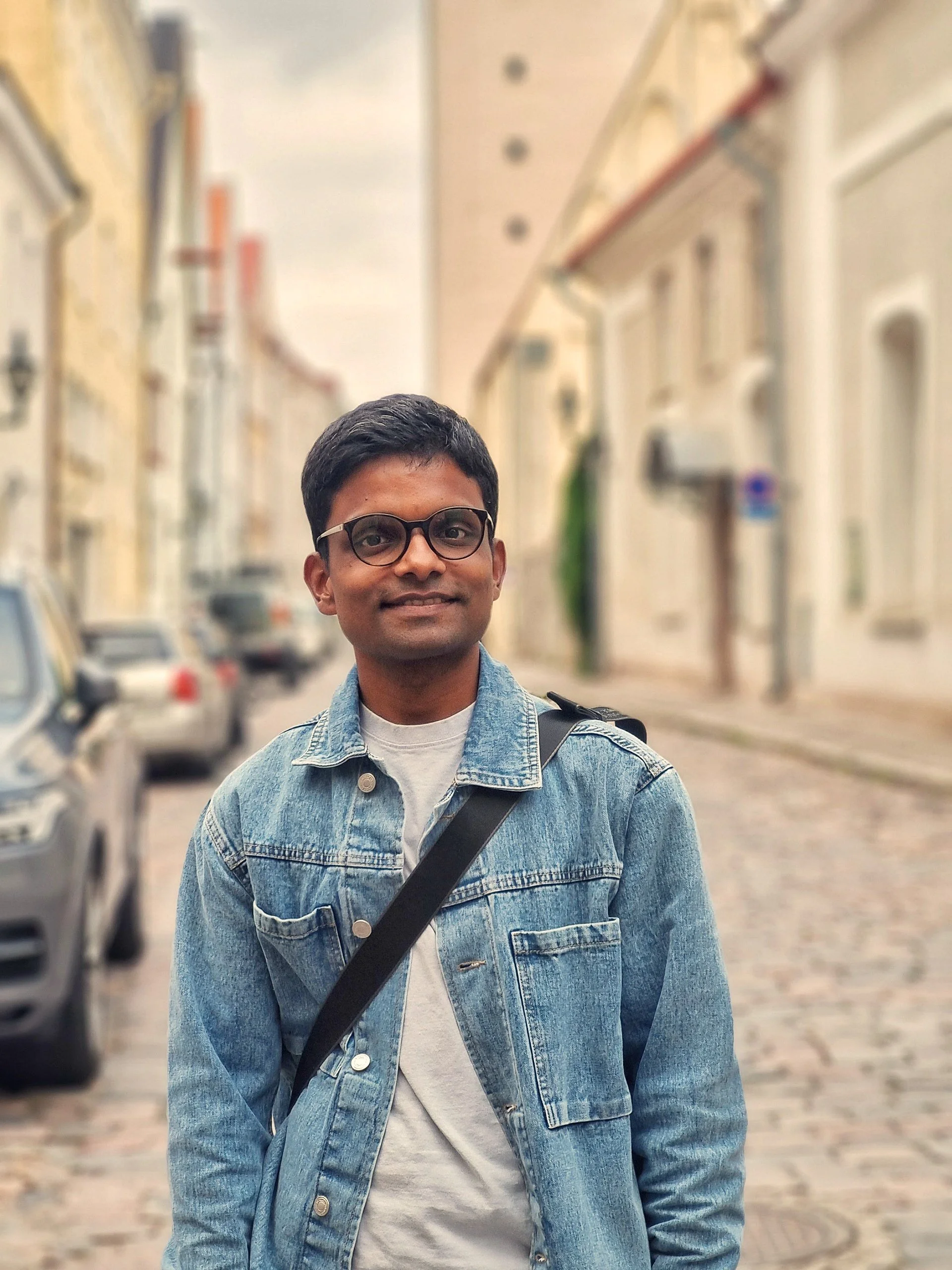
Shantesh Kelvekar is an architect, educator, and the founding partner of Reading Grounds, a Bengaluru-based design practice. His work sits at the intersection of architectural history, landscape urbanism, and the philosophical inquiry into how we perceive built environments. He currently serves as visiting faculty at CEPT University.
He holds an MA in Landscape Urbanism from the Architectural Association, London. He’s working in the field since 2009.
At the core of his thinking is a resistance to reading landscape and architecture by their physical attributes – "open" and "built". Instead, he reads them through perception: landscape as flexible, transitory, temporal; architecture as curated, structured, orchestrated.
This allows him to locate the landscapeness of built space – and to imagine built environments as ever-evolving systems. In an ecologically pressured world, this campaigns for a multiplicity in spatial expression, and therefore in lesser built mass.
Reading Grounds names both the act: a designer reading a ground; and the outcome: a ground capable of reading that, once catalysed, continues to evolve on its own terms.
For speaking engagements, academic collaborations, or professional enquiries – get in touch.
My parents loved travelling, and they took me along early.
I was six when we visited Meenakshi Temple in Madurai. I pressed my fingers into the crevices of the temple carvings, quietly hoping nobody had touched that exact spot – making a direct connection between the artisan and me.
I also remember visiting Taj Mahal when I was eight. We entered from the side gate. I kept my head down, until I was on the central axis. When I finally looked up, I felt nothing. Then I noticed something moving at the base of the monument and realised those were people. The scale revealed slowly the magnanimity and intricacy of the monument.
These are two distinct memories I return to whenever I ask myself how I got into architecture. Not registering as anything significant at the time, somewhere that is my first connection to my love for architecture.
When my parents were building our home, I saw the architect's drawings for the first time. That evening, I came home, dug out some old rough books from my earlier years. The last pages were full of drawings I had made of ship sections with people in it– without knowing what a section was. Looking back, I was probably trying to draw and grasp the scale. That was the moment, I properly enrolled into the idea of pursuing architecture.
Today I practise and teach architecture. Each day seems to uncover something I've always carried – something rooted in those early years, those travels, those memories – and at the same time, it feels entirely new. That is my induction into the field or architecture, and each day now is a new exploration.